The Science of Focus
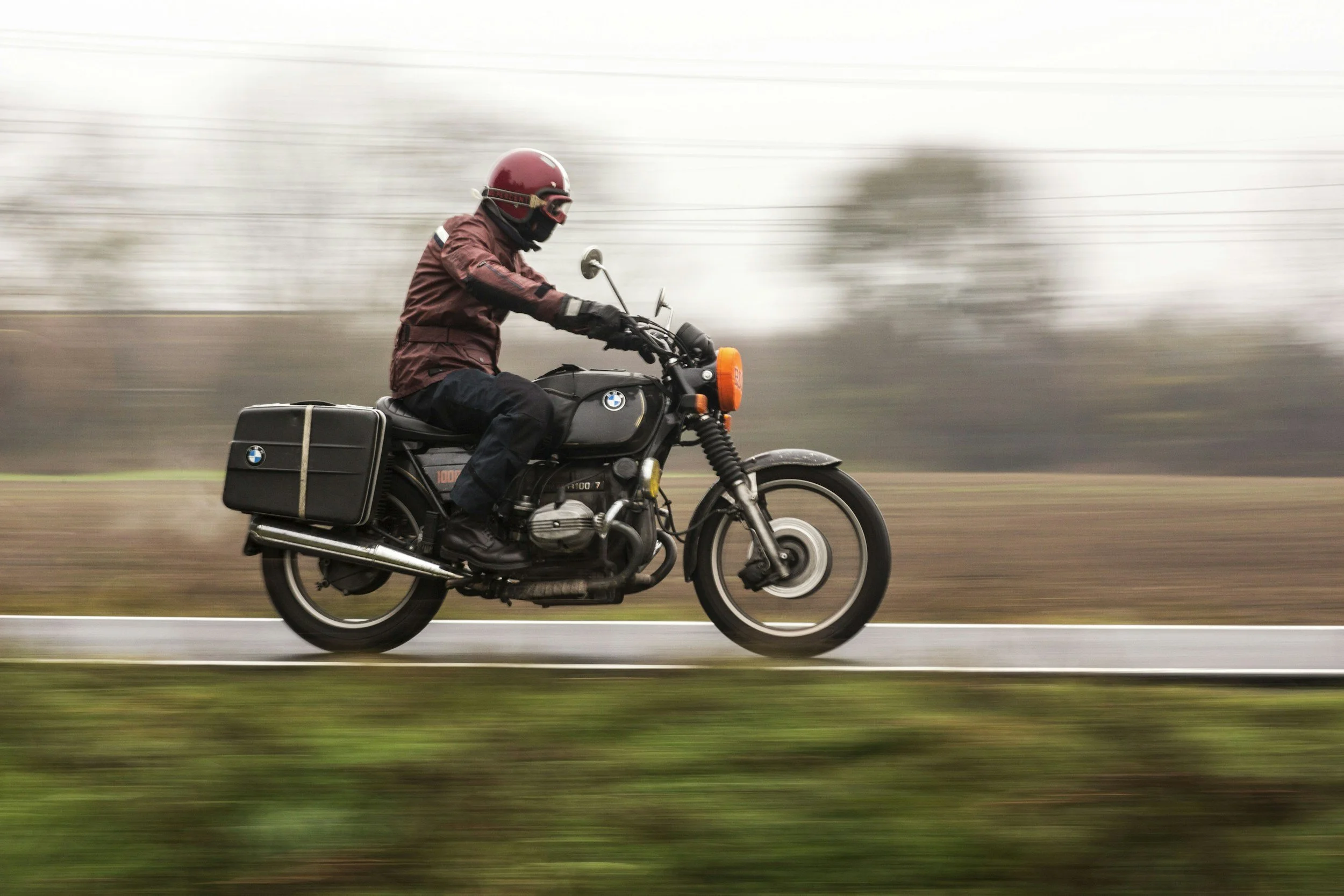
Relaxed Alertness: when you are entirely focused on the now.
Why Your Brain Needs Relaxed Alertness
What do riding a motorcycle, surfing, and FPV (First Person View) drone flying have in common?
We sit at our desks, stare at spreadsheets, and navigate crisis after crisis, believing that if we just push through, the breakthrough will come.
Biology disagrees. Pushing through produces cortisol, and when our cortisol spikes, our focus narrows. We stop seeing the bigger picture and fixate on the problems. That causes more stress, which produces more cortisol, and we’re stuck in a negative physiological cycle.
“The solution isn't to work harder. It is to shock the system into a different state entirely.”
Riders often describe motorbiking as ‘wind therapy.’ We ride to turn around a bad day, or to let thoughts fade into the slipstream. I needed that recently. I received bad news about a close friend, and the situation was completely out of my hands. The helplessness was paralysing; I lost all focus and fell into a loop of worry.
I stopped fighting it and headed out for a ride. The ride didn't change the news, of course, but it flushed out the mental noise. I returned with a clear head, able to function again.
While writing my book that draws parallels between riding and leading, I looked into this a bit more, and it turns out there is science proving what we felt all along - motorcycling regularly really is good for the brain.
The excellent news for those who don’t intend to jump on a bike is that there are other activities that provide the same benefit.
The Neuroscience
A 2021 study by neuroscientists at UCLA, led by Dr Don Vaughn confirmed what every rider knows instinctively. They measured the brain activity of people driving cars versus people riding motorbikes.
Their findings showed that drivers drifted into a passive, ‘autopilot’ state - their brains effectively went to sleep. Riders on the other hand entered a state of mind known as ‘Relaxed Alertness.’
This is the sweet spot of human performance. It is a unique neurological signature where stress hormones (cortisol) drop, but attention markers (sensory processing) spike. You have the calm mind found in meditation with the slightly increased heart rate and focus found in exercise. You are vividly, calmly present.
It makes perfect sense. On a motorbike, the consequences are real. You cannot ruminate on an email chain or worry about next quarter's forecast. If you lose focus, you crash. That risk forces the brain to dump the baggage and lock onto the now.
You Don’t Need a Motorbike
The leadership lesson here isn't that you need to go buy a motorbike (though I highly recommend it). The lesson is that you cannot think clearly if you are stuck in chronic stress. You need a mechanism to reset your system.
Different activities trigger this state, from martial arts to music, but the core principle is simple: you need a high-consequence hobby.
To reach Relaxed Alertness, you need an activity that combines:
Total Presence - You can’t think about work or use your phone.
Consequence - There must be an element of risk. Whether it is physical (falling), social (ruining a live performance), or practical (burning the meal), the fear of getting it wrong forces the brain to lock in.
Active Engagement - You are doing, not just watching.
For some, that’s rock climbing. For others, it’s surfing, skiing, playing live jazz, or piloting FPV drones.
Relaxed Alertness at Work
This connects to our behaviour at work because focus is a muscle we can train.
If you spend your free time in a state of passive consumption (TV, scrolling), your brain never learns how to regulate high pressure. However, if you spend it navigating a cliff face or a racetrack, you are training your nervous system to stay calm when the stakes are high.
You are teaching your brain to choose focus over fear.
So, when the crisis hits on Monday morning, you have been there before. You know how to breathe, look up, and steer through the chaos.
Engineering Your Own Reset
You don’t need two wheels to hack your brain chemistry, but you do need a strategy. Here is how to apply the science of Relaxed Alertness this week:
Audit Your Downtime Be honest: is your current relaxation active or passive? If you are spending every evening doom-scrolling or watching Netflix, you are just numbing your brain. Swap one hour of passive consumption for an activity that demands your hands and your eyes.
Create Deep Focus Moments In the office, we often suffer from continuous partial attention. Create a physical ritual that signals deep focus. Put on noise-cancelling headphones, close the door, or move to a specific chair. Signal to your brain (and your team) that you are in the zone.
Find Your High Consequence Hobby Identify one activity you can do where a mistake has a consequence; a slip of the chisel in woodworking, a missed braking point on a racing simulator, or a wrong note in a band rehearsal. It forces you to lock onto the now. If you can’t check your phone while doing it, you’re on the right track. If your mind can wander, keep looking for another activity.
Mirror Check
The specific activity does not matter but the result does.
As a leader, you cannot operate in a permanent state of high-alert crisis mode. That is a recipe for bad decisions and eventual burnout. Nor can you simply zone out on autopilot.
You need a practice that forces you into Relaxed Alertness. You need a space where the noise of the office is not silenced by social media, but by intense, joyful focus.
Look at your calendar. You have plenty of meetings scheduled. But where is your ride?
Reflection: What is the one activity where you lose track of time and cannot possibly think about work? If you haven't done it in the last month, you are dangerously overdue.
Thank you for reading this far. If any of this resonates, I’d love to welcome you as a reader and to stay connected. Please join the mailing list for future posts, share your thoughts in the comments, or find me on LinkedIn.
